
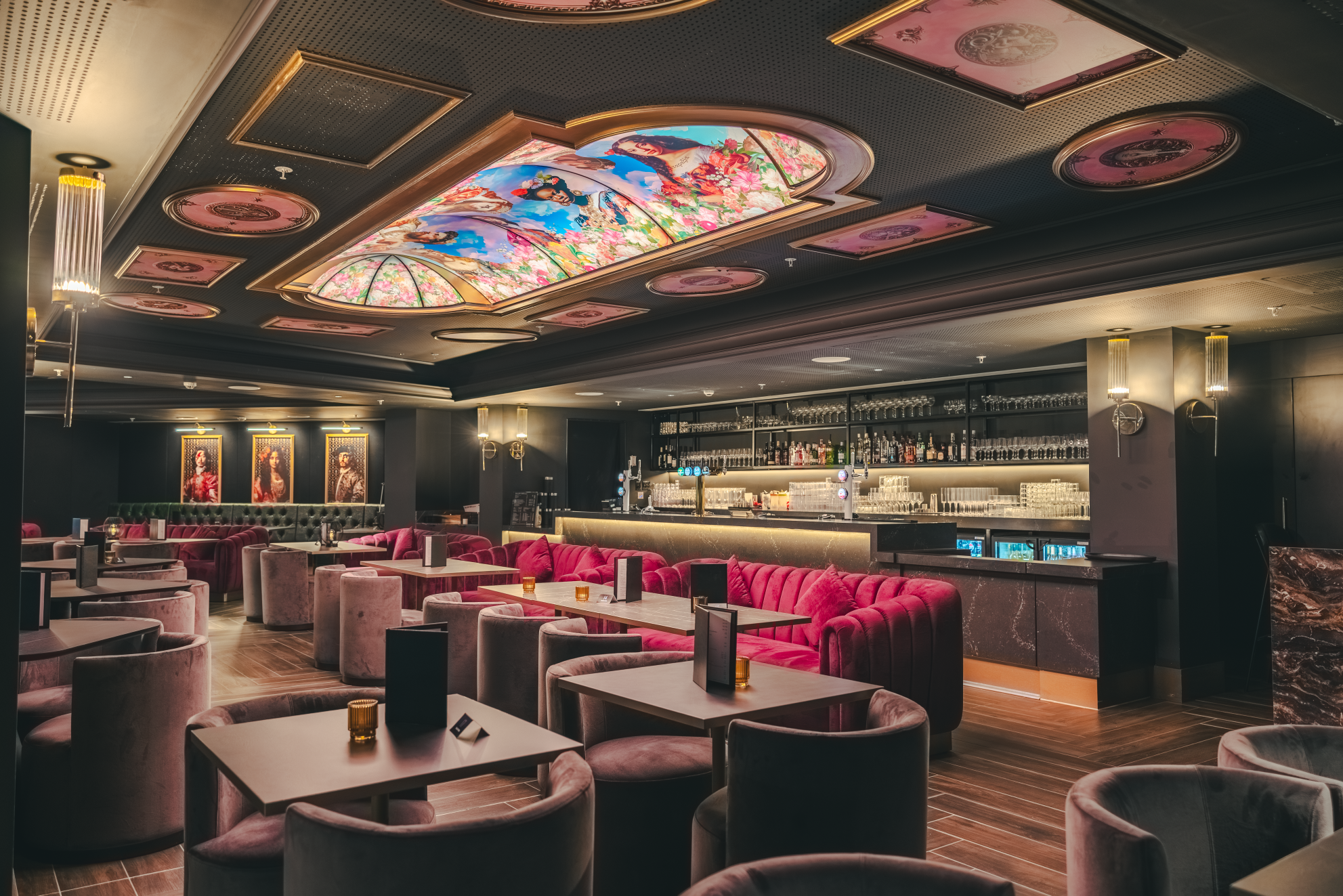
Co-op Live is a strong example of just how much work sits behind a finished hospitality space.
With an approximate package value of £4.2 million, Gariff was appointed by BAM to deliver specialist joinery and metalwork for the Manchester venue, working to designs by Populous/JUMP.
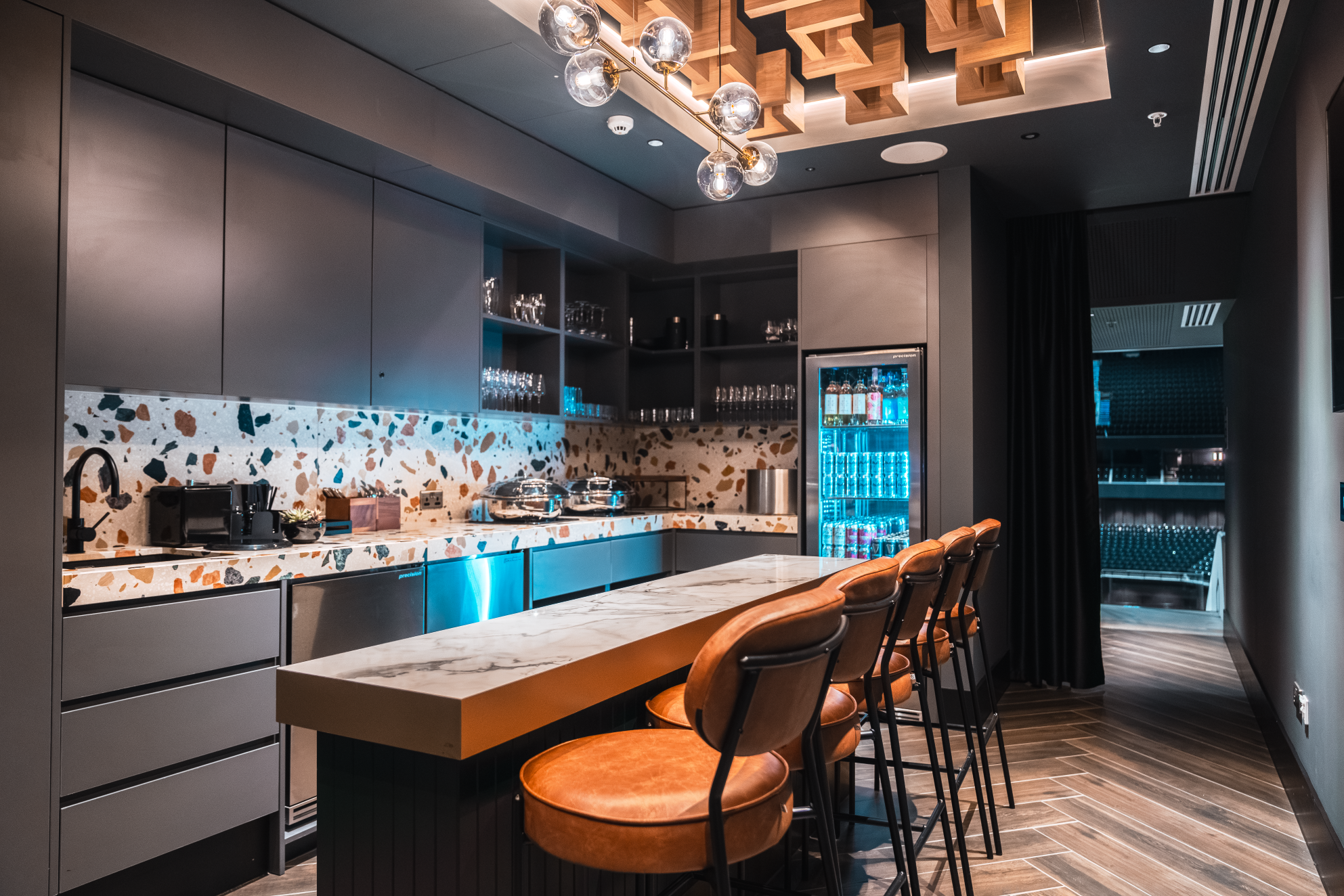
Our scope covered bars, gantries, kitchenettes, drink shelves, banquettes and architectural metalwork across the project.
As a hospitality joinery contractor, it’s the kind of scheme that demonstrates the scale and breadth of specialist work our team is equipped to deliver.
Although the finished spaces speak for themselves, there’s a considerable amount happening behind them. This was a substantial package bringing together manufacture, storage, logistics and installation across multiple areas of the venue.
Inside Gariff’s £4.2m package at Co-op Live
On a project this size, there’s a wide mix of elements across the hospitality spaces.
Bars sit alongside gantries, banquettes sit within finished seating areas, and drink shelves, kitchenettes and architectural metalwork add another layer of detail.
Taken together, they show what a hospitality joinery contractor needs to be able to deliver when the scope goes well beyond a few one-off items.
Our role was centred on bespoke metalwork and joinery, manufactured and installed as part of a specialist package for BAM. It brought a broad range of our capabilities together within one project, with different elements being delivered across multiple hospitality spaces.
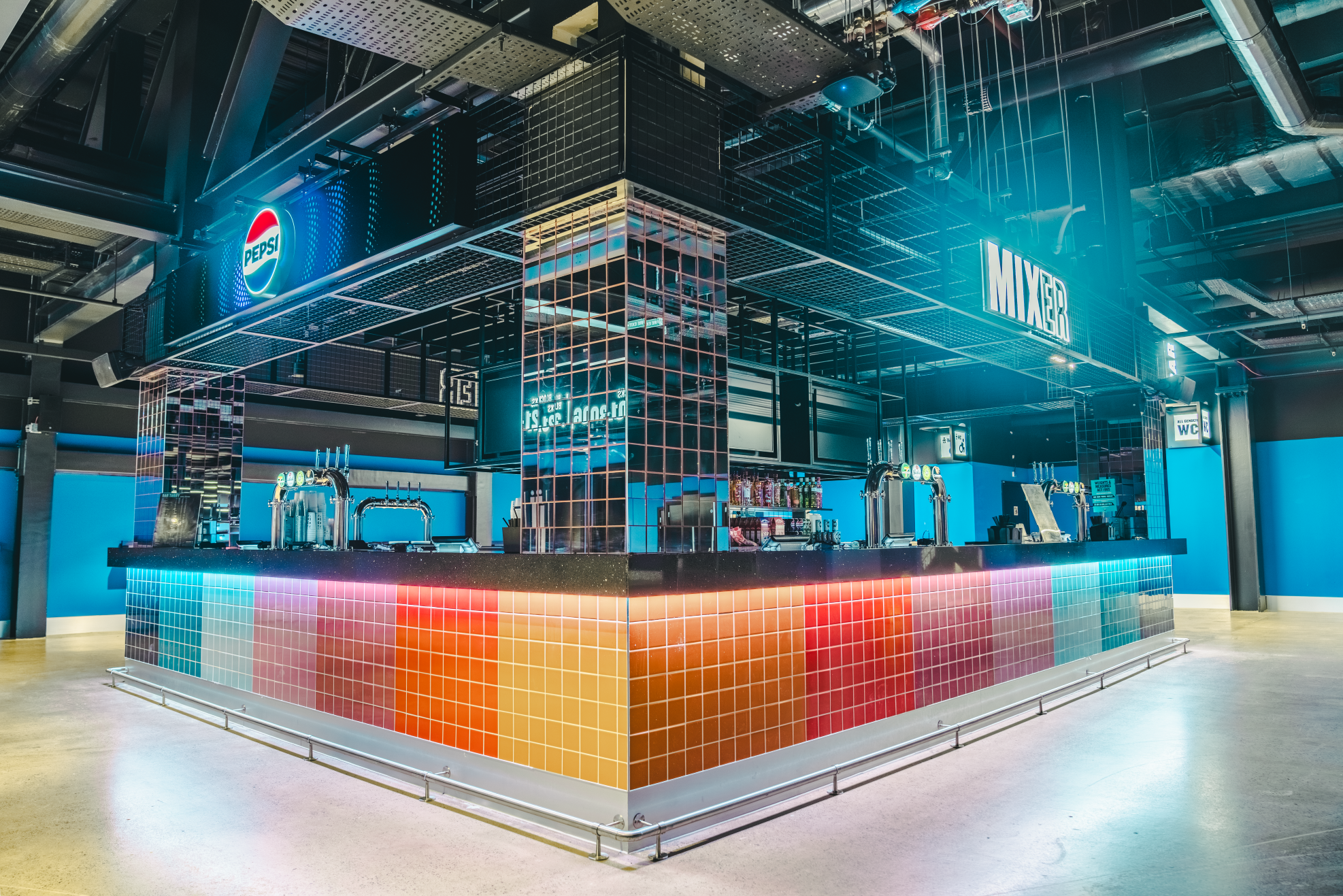
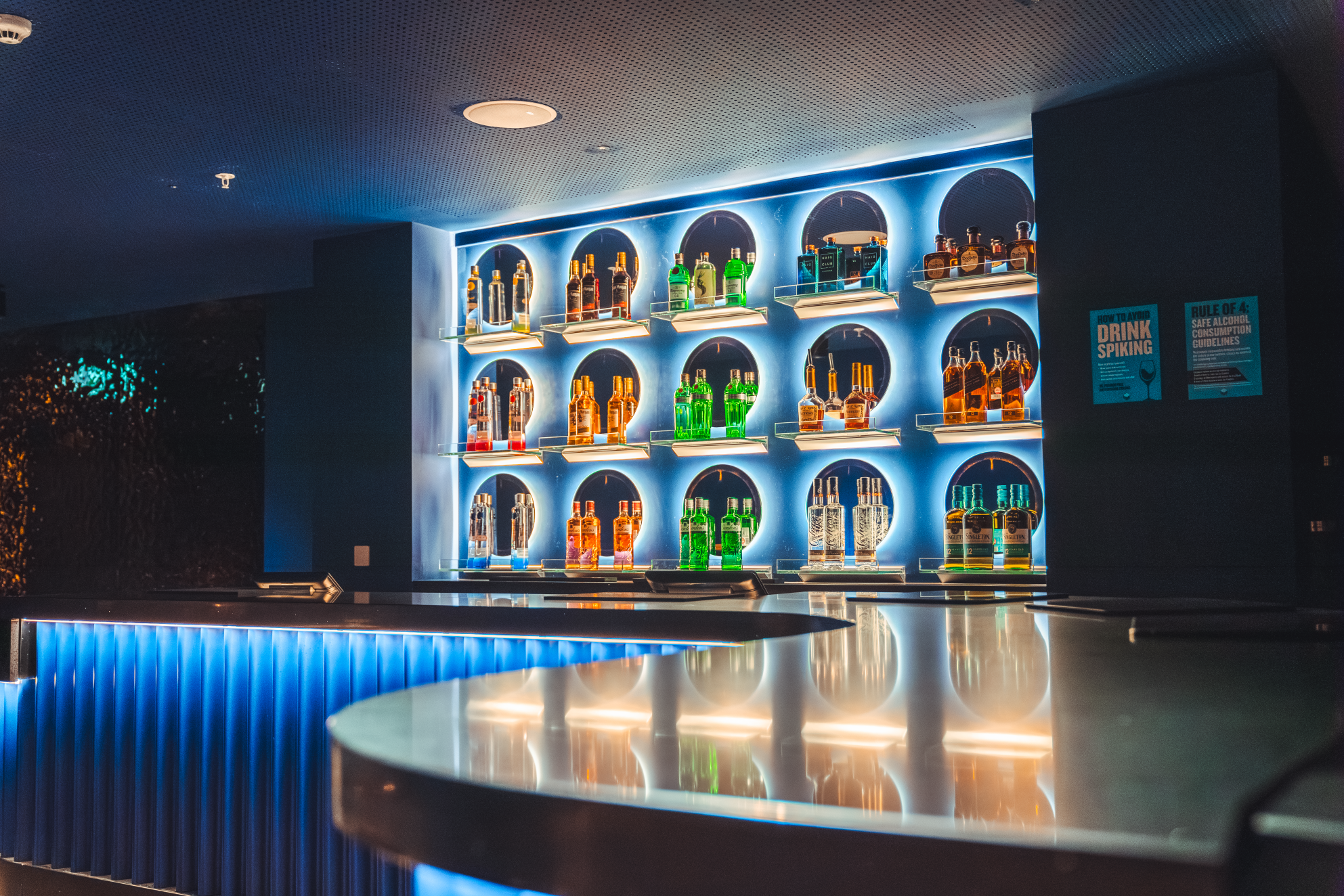
That variety is clear in the finished photographs. You can see a completely different space from one image to the next, while the quality and finish remain consistent throughout.
Bars, banquettes and plenty in between
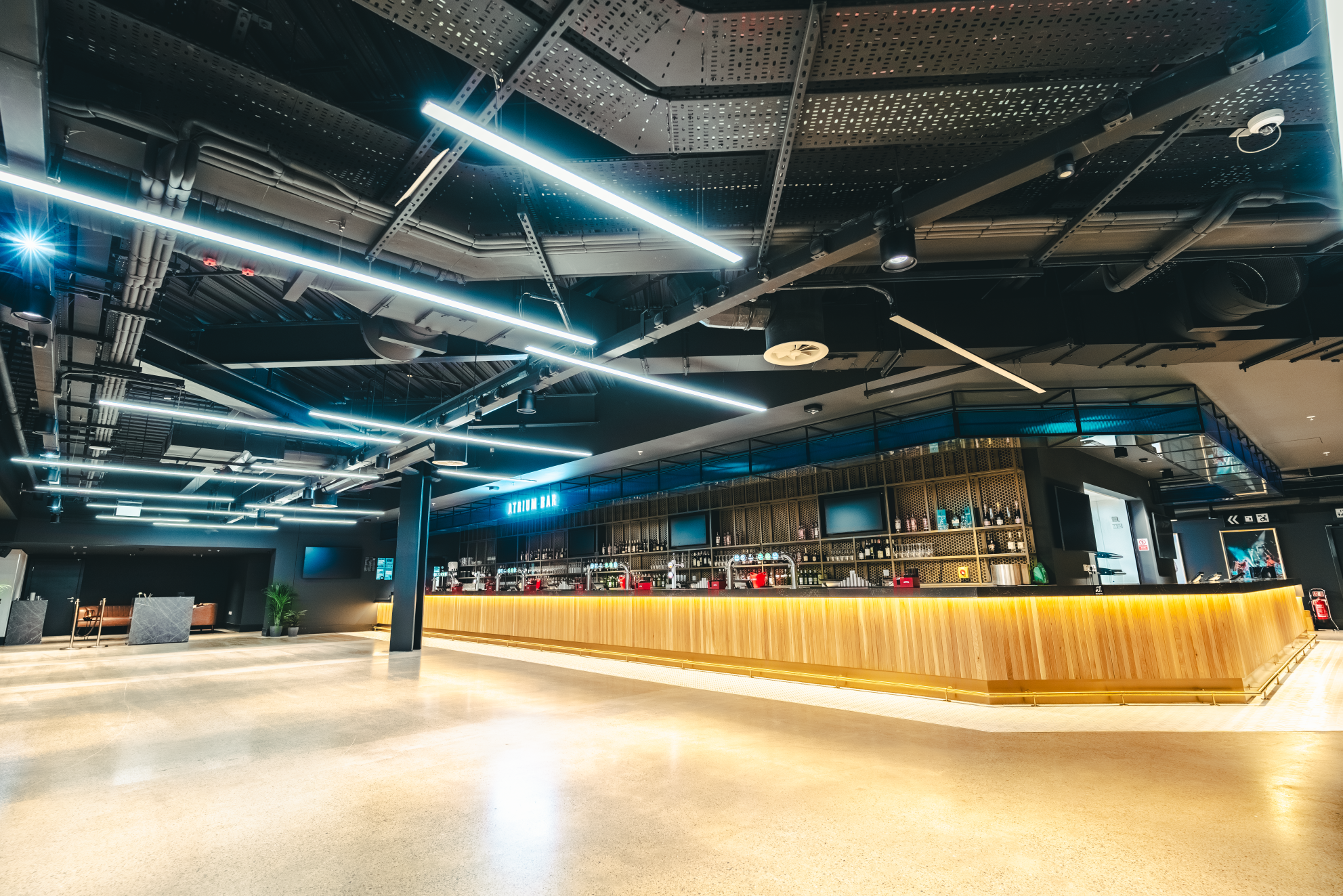
The bars are naturally some of the most prominent features throughout the finished spaces.
They’re large, highly visible and a major part of how many of the hospitality environments are experienced. This wasn’t simply one bar fit out within the venue either, our package covered bars across a number of spaces, alongside the other joinery and metalwork elements around them.
For a hospitality joinery contractor, work like this demonstrates what bespoke manufacture looks like once it leaves the workshop and becomes part of a completed environment.
The same goes for banquette seating.
When it’s finished and looks beautifully simple, it’s usually a sign that the work behind it has been properly considered. Behind that simplicity are dimensions, finishes and installation requirements that all need to line up.
Our scope also included gantries, kitchenettes and drink shelves, so there was plenty happening beyond the most immediately visible pieces in the photographs.
There’s considerably more to a £4.2 million joinery package than producing one feature element. Each part needs to work within the wider space and alongside the elements around it.
Manufactured in Manchester, made for Manchester
With the Gariff manufacturing base in Trafford Park, Co-op Live is a strong example of our specialist joinery capability being used on one of the city’s major entertainment venues.
We manufactured substantial volumes of joinery through our own operation before sending it on the relatively short journey to site.
In house joinery manufacturing gives us clearer visibility over what’s being produced, what’s ready and how workshop output connects with the installation programme.
That matters when you’re dealing with this much joinery.
The manufacturing involved here wasn’t about producing one feature piece and moving on. We were dealing with volume, variety and multiple hospitality areas at once.
What does delivering joinery at this scale actually involve?
Manufacturing is only one part of the process.
A hospitality joinery contractor working at this volume also needs to think about what happens after an item is manufactured.
At Co-op Live, manufacturing substantial volumes of joinery offsite meant the production side had to be backed by careful storage and delivery planning.
Finished elements needed to move through the process in a way that supported installation. We coordinated storage and logistics so items could be delivered just in time, rather than arriving simply because they were finished.
Those parts of the job often go unnoticed when they’re done well, which is exactly how it should be.
Because what’s happening in the workshop needs to make sense for what’s happening on site, we see in house joinery manufacturing and commercial joinery installation as part of the same bigger picture.
Big package, lots of moving parts, one finished result
When people walk into a hospitality space, they don’t see a manufacturing schedule.
They see the bar in front of them, they notice where they’re sitting, and they take in the finishes, the metalwork and the overall feel of the space.
That’s why the final details matter.
A hospitality joinery contractor might spend months thinking about production and installation, but the person eventually using the space should simply see something that feels finished and looks considered.
Across the project, we manufactured and installed a wide range of specialist joinery and metalwork in multiple areas.
The banquette seating adds another layer to the finished spaces, sitting alongside the bars and architectural metalwork you can see throughout the project.
While a bar fit out can be a project in its own right, at Co-op Live each bar formed part of a much wider package.
Why scale is about more than workshop capacity
Being able to manufacture a large amount of joinery is one thing, but being organised enough to manage it is just as important.
A hospitality joinery contractor needs to understand what’s in manufacture, what’s complete, what’s being stored and what the site team is ready to receive.
That’s also why commercial joinery installation needs to be considered long before the first delivery turns up.
Managing that many moving parts without losing sight of the detail is a key part of delivering specialist work at this level.
What should you expect from a hospitality joinery contractor?
If you’re appointing a hospitality joinery contractor for major leisure or entertainment projects, the portfolio is an obvious place to start.
It goes without saying that the team needs to be able to produce high-quality work, but it’s also important to look beyond the finished photographs and ask:
Can the contractor manufacture at scale?
Can it manage different types of joinery within one package?
How does it approach storage, delivery and site installation?
For a hospitality fit out contractor, main contractor, architect or project team, those things make a big difference when specialist packages become larger.
Our work at Co-op Live provides a strong example of how those elements come together.
Specialist joinery delivery at Co-op Live
Completed in April 2024, the Co-op Live project is a strong example of our craftsmanship, manufacturing capability and ability to coordinate specialist work at scale.
From the substantial volume of joinery manufactured offsite to the finished bars, banquettes, gantries and architectural metalwork throughout the venue, each element formed part of a coordinated approach to delivery.
If you’re looking for a hospitality joinery contractor for a leisure, entertainment or hospitality project, contact us to discuss your next scheme.